
What Is a Scientific Visual Library? 🧬 🧫 A Guide for Biotech and Medical Affairs Teams
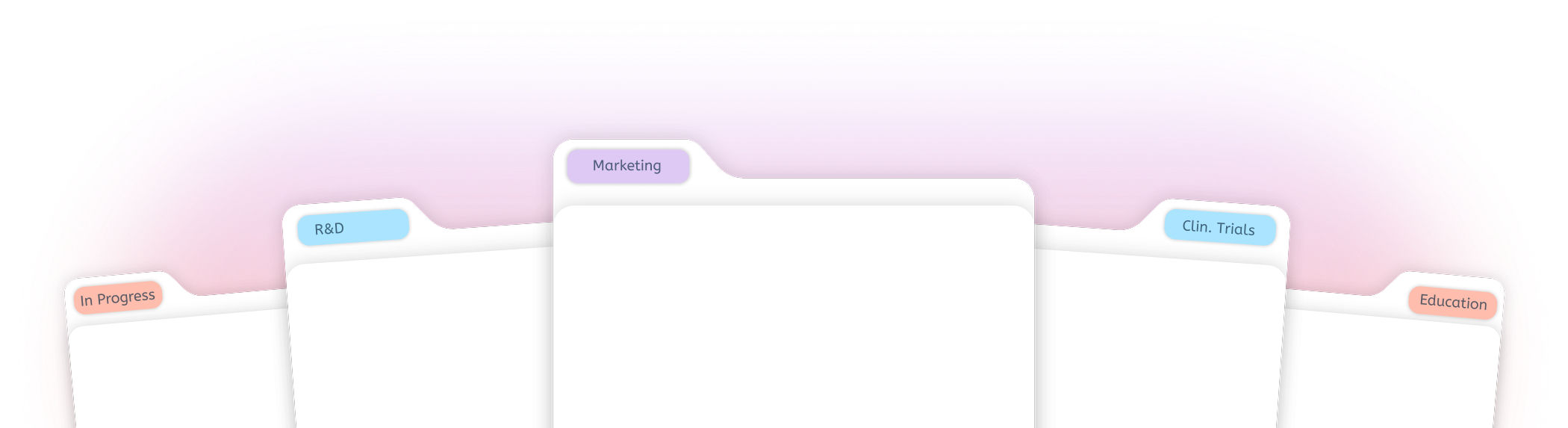
Scientific visual library: virtual folders organized by department holding specific content.
A scientific visual library, which, depending on teams, is sometimes also called a scientific visual lexicon, is a structured set of reusable scientific visuals and visual components that are approved for reuse. It has the wonderful purpose of helping biotech, pharma, and medical affairs teams explain the same science consistently across decks, training, congress materials, patient education, and web pages.
What is a scientific visual library?
A scientific visual library is a searchable collection of scientific illustrations, diagrams, icons, visual components, source files, and maybe even usage notes that a team can reuse across projects.
At Visualmedics, we believe every team should have one, and there are different ways to build it.
It is not just a folder of final images. A useful scientific visual library preserves the approved visual file, scientific review context, intended audience, it contains information about the science with a level of detail that is shaped according to the audience, usage rights, visual language, and reusable components.
What is a scientific visual lexicon?
A scientific visual lexicon is the shared visual language behind the library.
The library is where the assets live. The lexicon is how the science is represented consistently: molecules, pathways, anatomy, disease states, icons, mechanisms, colors, labels, and levels of simplification.
In practice, many teams use related terms: scientific visual library, scientific visual lexicon, scientific image library, medical illustration library, or scientific visual asset library.
Why 🧬 biotech teams need reusable scientific visuals
In our view, most biotech teams start building visuals when the science is ready to be communicated to the world, and at that a stage in which they face a strong time and budget pressure which turns into a communication issue, if not managed well.
Most often, teams scrap for the one figure that was made for an investor deck. Another visual, which was made for a congress presentation, could be a good candidate for a follow up image. Another visual might come from an agency project or the occasional freelancer project. Another is inside an e-learning module. Another is approved, but nobody knows if it is the latest version.
We’re sure its the kind of pain you’ve experienced before. The image may work on its own. But when the same science keeps being redrawn, rechecked, reformatted, and searched for, the team loses time and consistency.
When does a biotech team need a scientific visual library?
Biotech teams should consider a scientific visual library when the same science needs to be explained repeatedly across different audiences and formats. That’s also way before you need to build that 3D animation for raising capital.
Common signs:
the same mechanism of action is redrawn in multiple decks, by multiple people.
your approved visuals are hard to find, there’s not a system in place that helps you with that.
files are missing when most needed, buried in anonymous folders
scientific review happens from zero on every project
visuals look different across programs, with several visual representation of the same items
medical, investor, patient, and training materials reuse the same science differently
teams rely on old decks to find images
visuals are accurate once, then lose context later
Is a scientific visual library the same as a DAM?
No. A DAM (ex. Veeva Vault), or digital asset management system, stores and manages files.
A scientific visual library or visual lexicon is created and kept organized especially for your company. It includes the visual decisions, scientific context, reusable components, and review logic that make the assets trustworthy and reusable. It uniquely yours.
Is a scientific visual library the same as BioRender?
No. BioRender and shared scientific diagram tools are useful for quick visuals and generic scientific conventions. They’re widely used by research centres and for your scientific team. But when the science needs to reach a different audience it needs to evolve.
A custom scientific visual library is different because it is built around your company’s own science, visual language, approval needs, audience variants, and reuse cases.
Use shared tools when speed is the priority. But make sure to build a custom scientific visual system when the science needs to become recognizable, ownable, reusable, and consistent.
FAQs
What is a scientific visual library?
A scientific visual library is a structured collection of approved, reusable scientific visuals and components that help teams explain the same science consistently across channels and audiences.
What is a scientific visual lexicon?
A scientific visual lexicon is the shared visual language used to represent scientific concepts consistently. It defines how molecules, mechanisms, pathways, anatomy, icons, and disease states should look and behave across materials.
Is a scientific visual lexicon the same as a scientific visual library?
They overlap. A library usually refers to the organized asset collection. A lexicon emphasizes the shared visual language and rules behind those assets.
Who needs a scientific visual library?
Biotech, pharma, medtech, medical affairs, training, and scientific communications teams may need one when they repeatedly explain the same science across multiple materials, teams, and audiences.
What is the first step?
The Best thing you can do today to understand where you need a library or you're fine is to have a visual audit done: to first review what exists, select what is accurate, refine what is approved, decide what can be reused, and identify what needs to be rebuilt.
At Visualmedics, we call this a SBVL.. Check it out here