
How a Scientific brand image bank™ made ATTR‑CM🫀 visuals clear, consistent, and reusable.
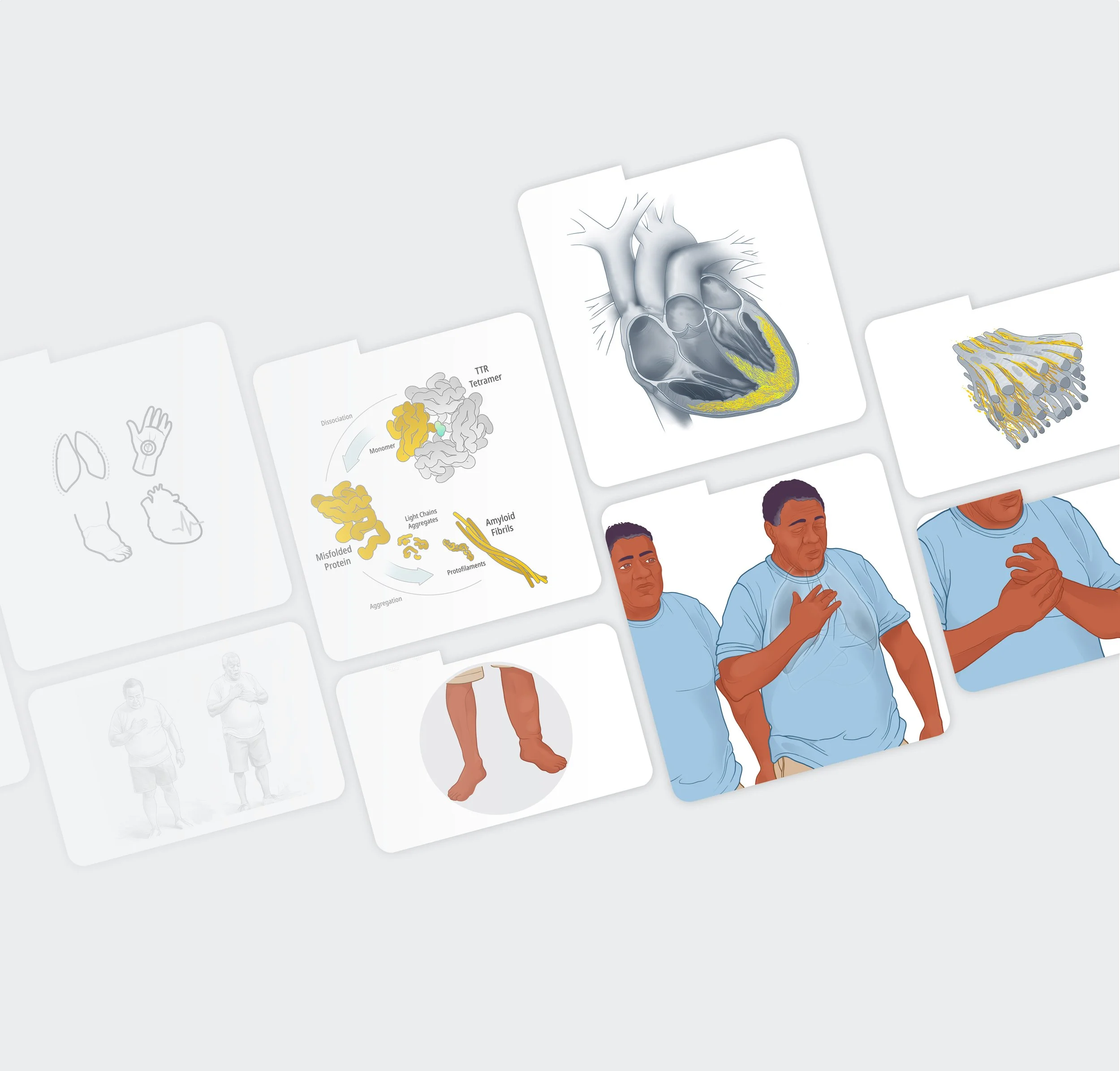
Teams needed a coherent set of ATTR‑CM visuals for patient, HCP, regulatory, and investor contexts. One‑off images caused style drift, slow reviews, and limited reuse. We built an SBIB™ collection: brand‑fit templates, a tagged component library, and review notes. Result: faster approvals, fewer review loops, and consistent rare‑disease communication. Teams now reuse assets across projects, keeping the brand consistent while saving time.
Problem
Mixed styles from ad‑hoc assets across channels
Re‑drawing similar ATTR‑CM diagrams (MoA, symptoms, pathways)
Delays from compliance and labeling changes
Need to serve multiple audiences from one visual source
Before drawing a single line, we outline the story: What is ATTR-CM, how does it manifest? What is the patient's journey and how does care look like?
What they got & results
Visual language guide for rare‑disease communication
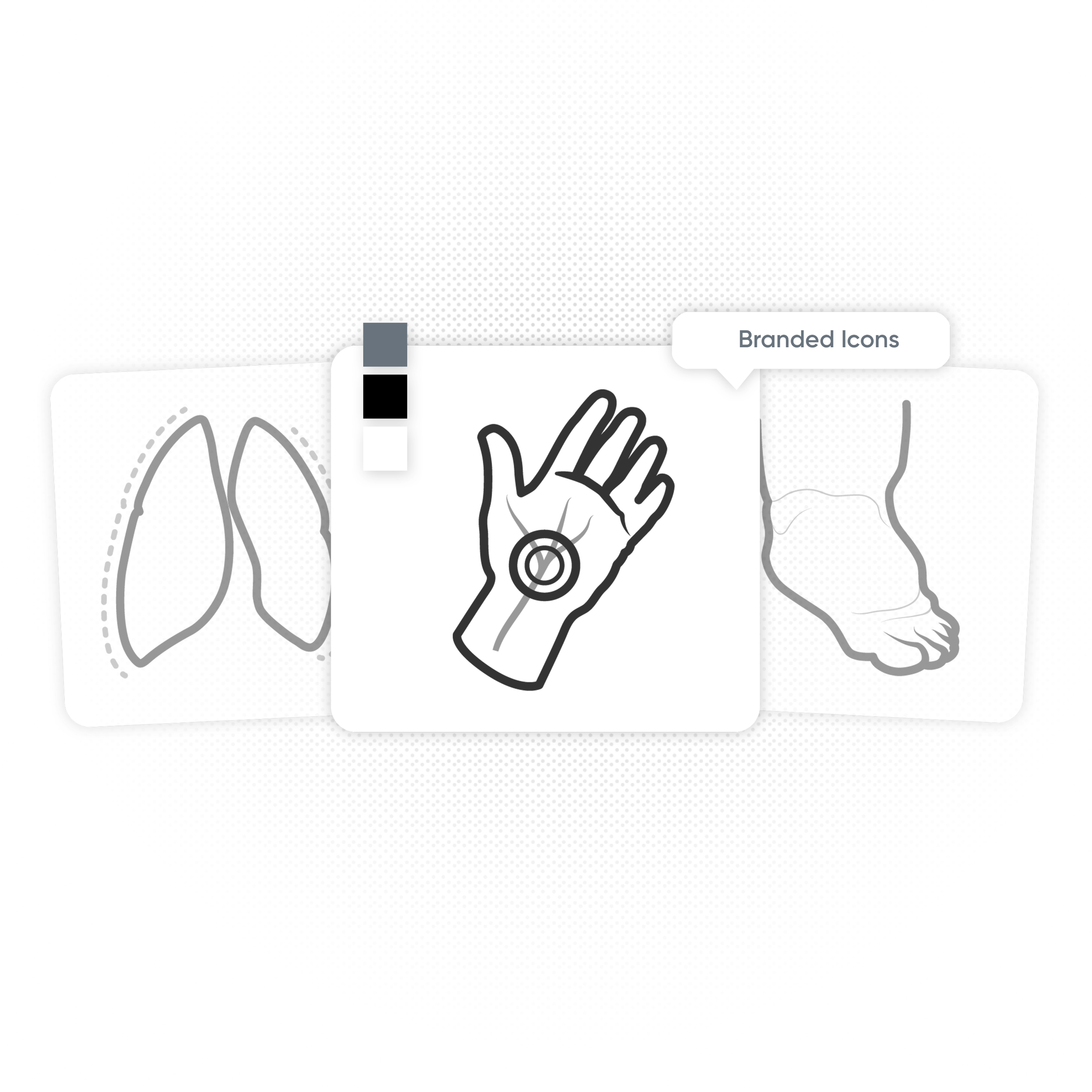
Template pack (MoA, symptoms, HCP decision aids, icon set)
Starter library for ATTR‑CM with pre‑approved variants
Faster first approvals and fewer review rounds on figures
Reuse across decks, HCP materials, and patient leaflets
Consistent brand and terminology across channels
Clearer comprehension for all stakeholders
What we did
We dove into the science, talked to our experts, researched, and mapped what truly mattered. Then we cut everything that didn't serve clarity.
Extracted brand basics: palette, typography, iconography, and readability rules
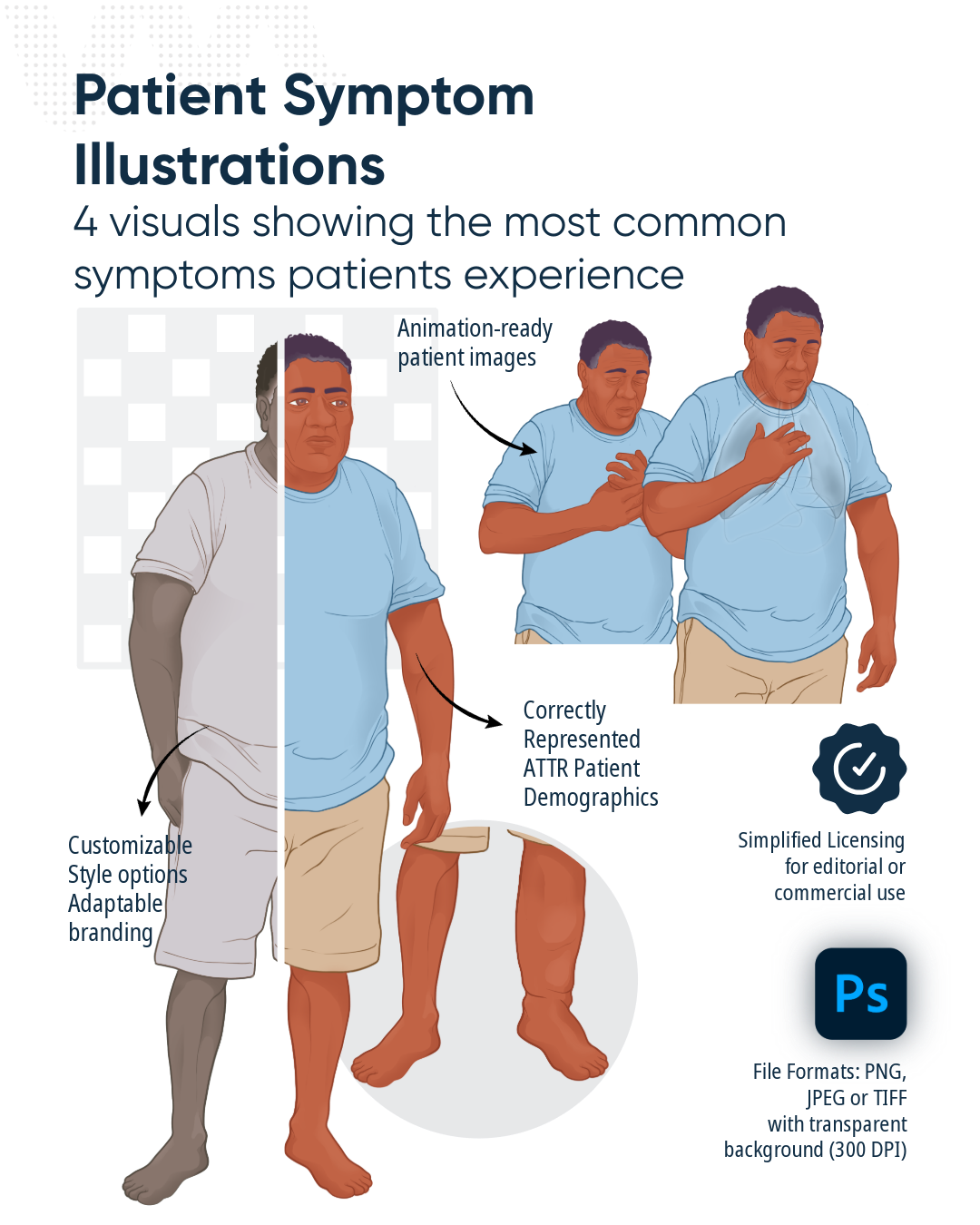
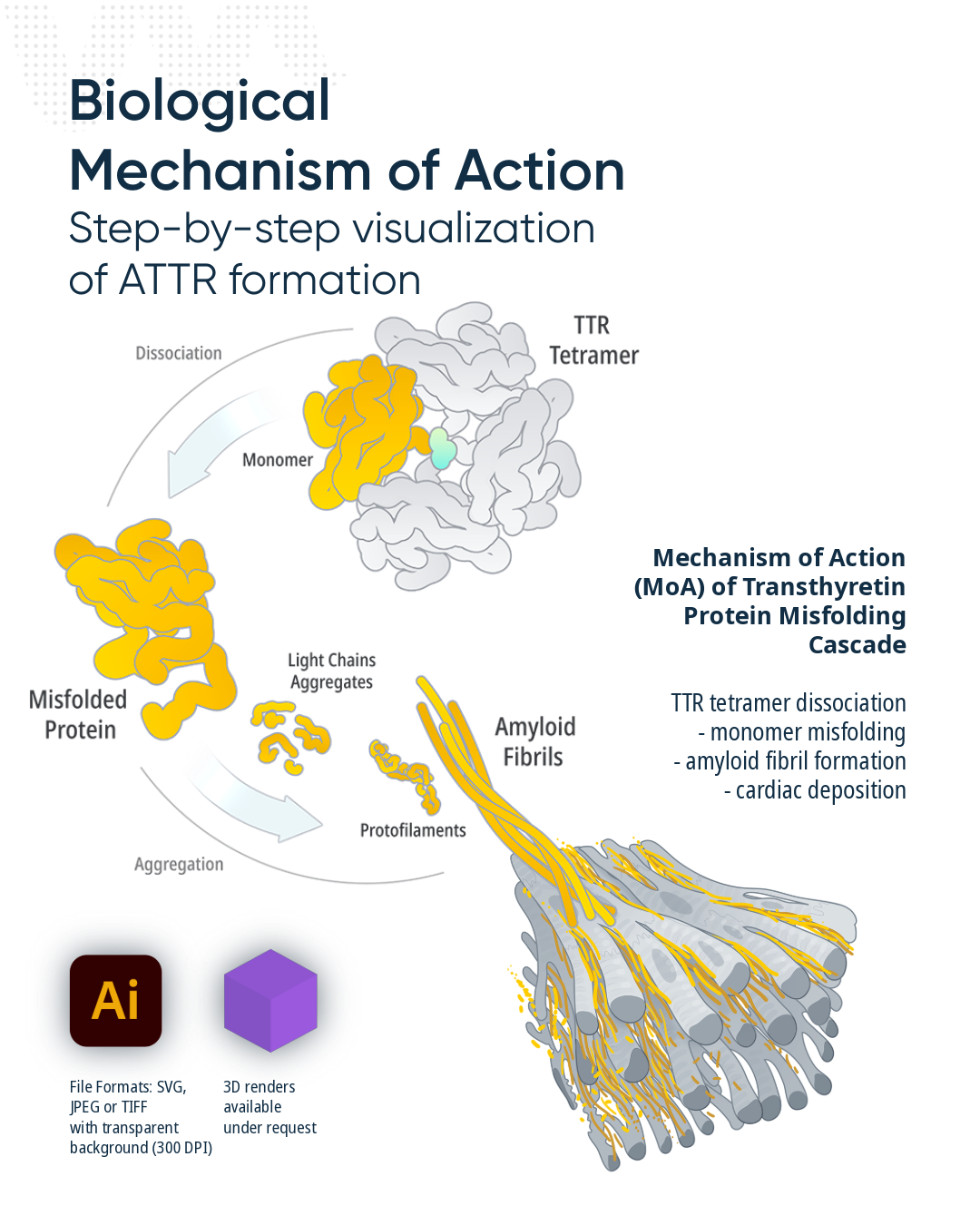
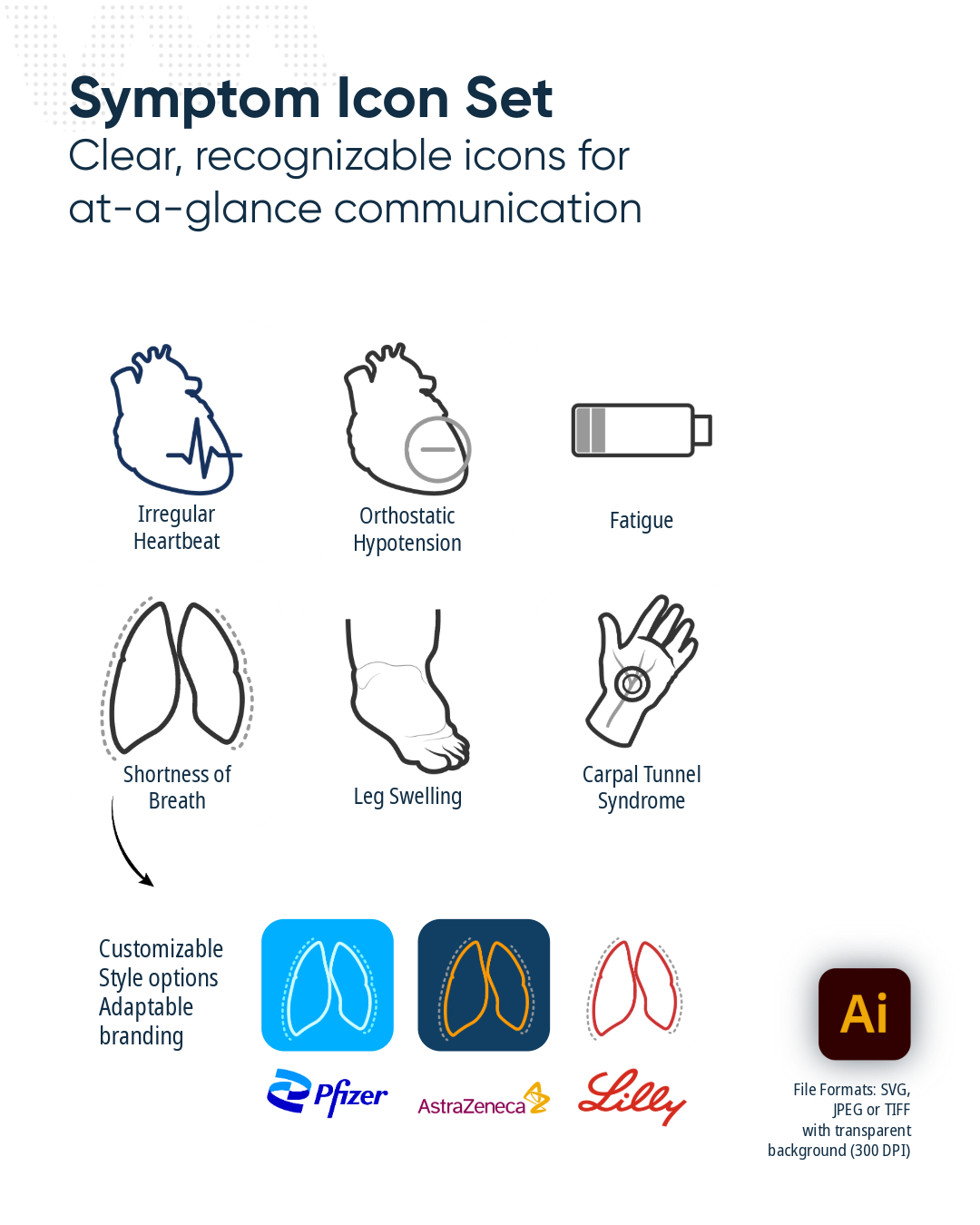
Built templates for core sets—condition overview, MoA sequence, HCP tools, patient symptoms, symptom icons
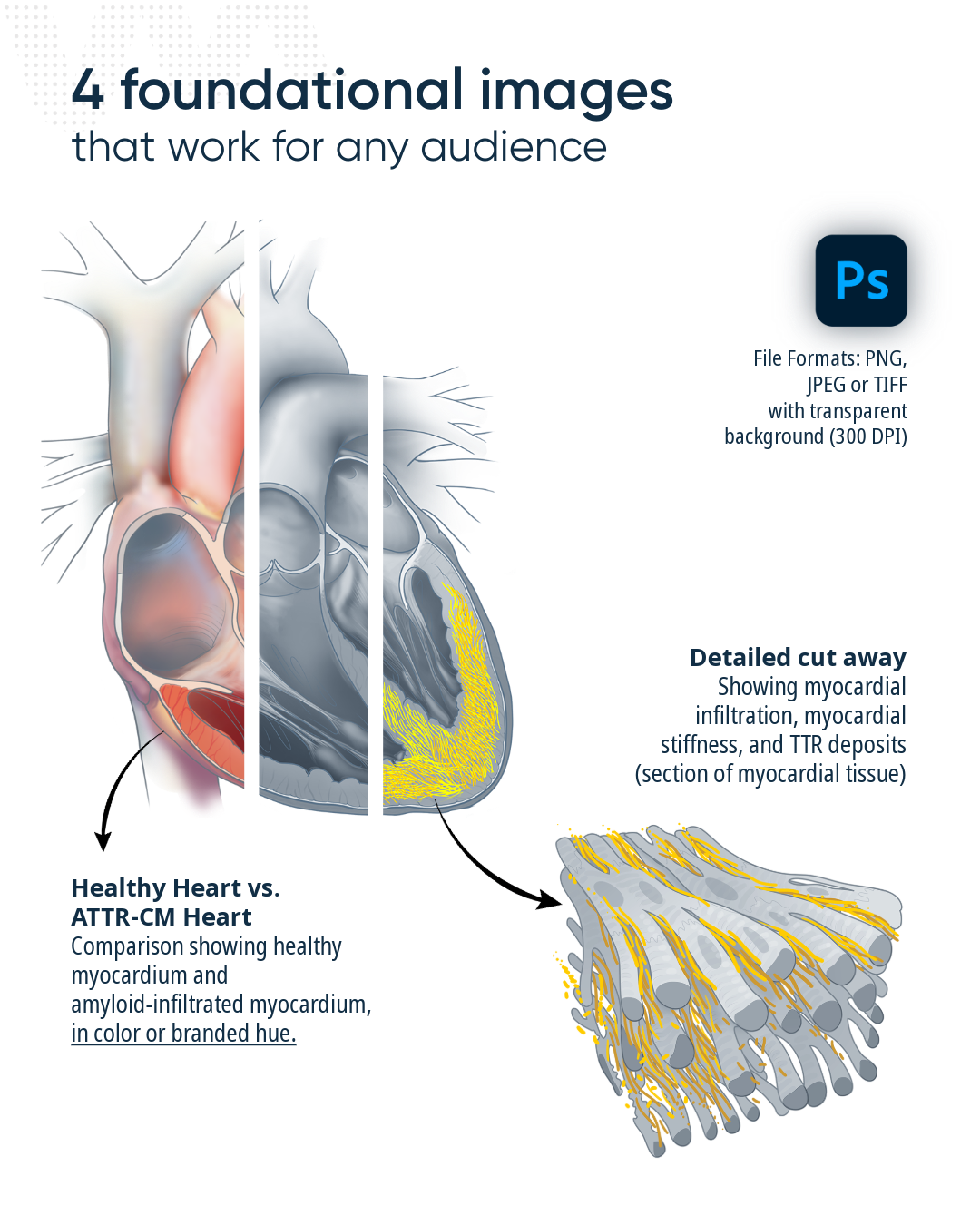
Created a component library: heart/anatomy plates, amyloid deposition states, TTR forms

Why it works
One source of truth keeps patient visuals simple, consistent, and compliant
Templates and components speed creation and updates
Review notes and pre‑approved assets reduce back‑and‑forth
Built‑in notes align medical, regulatory, and brand reviews
The Subject
Transthyretin Amyloid Cardiomyopathy (ATTR-CM) is a progressive, underdiagnosed condition where misfolded TTR protein deposits as amyloid fibrils in the heart, disrupting structure and function. TTR, a liver-produced protein that transports thyroxine and retinol-binding protein, becomes unstable and aggregates in cardiac tissue.
Two forms exist:
Wild-type ATTR-CM: Affects older men, progresses slowly.
Hereditary ATTR-CM: Caused by TTR gene mutations; severity varies.
Symptoms include heart failure, often preceded by carpal tunnel syndrome and autonomic dysfunction. Diagnosis is often delayed due to overlap with other conditions.
Treatment stabilizes TTR, reduces production, or supports heart function.
Build your 🧬💊🧫🫀
Scientific Brand Image Library™
A custom scientific image bank supports your investor pitches, regulatory submissions, and brand storytelling.